
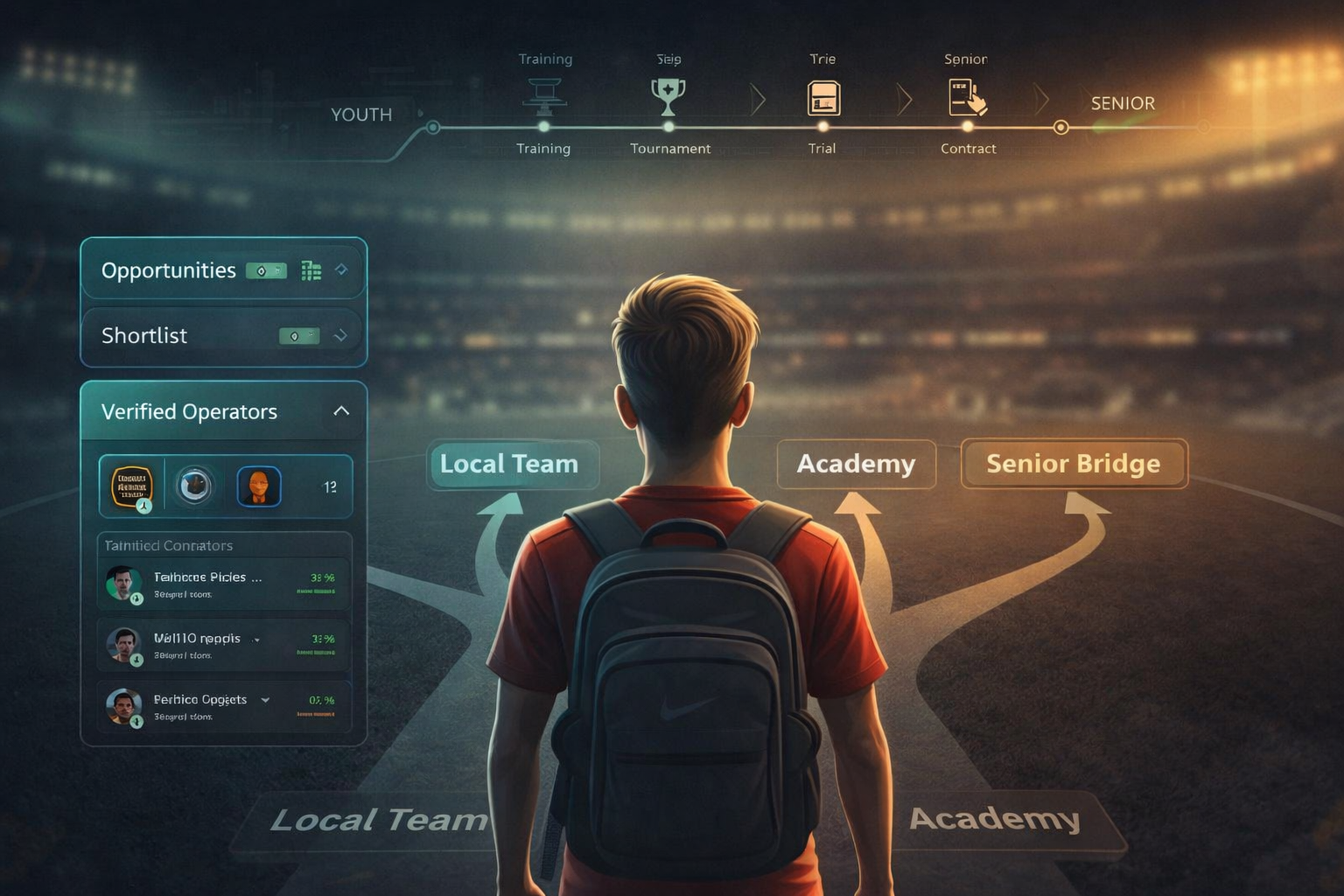
Times changed: talent alone won’t carry you
The old story was simple: be good, work hard, someone will notice.
That story is outdated.
Today, thousands of good athletes exist. The difference between “almost” and “made it” is often:
-
the environment you grew in
-
the decisions you made at 14–18
-
the people around you
-
and whether you were in the right place when the right opportunity opened
A sports career is not just performance. It’s strategy plus performance.
1) Youth years are not “training years.” They’re positioning years.
Between roughly 13 and 19, you’re not only improving skills—you’re positioning your future.
This is the phase where your path gets shaped by:
-
level of competition
-
quality of coaching
-
playing time and role clarity
-
exposure to scouts and senior clubs
-
tournaments and international windows
-
strength & conditioning standards
-
injury prevention culture
-
mental development and discipline
If you stay in a weak environment too long, you don’t just “progress slower.”
You lose time. And time is a currency you cannot buy back.
2) Choosing an academy is not a “team choice.” It’s a career decision.
Families often pick an academy based on comfort:
-
close to home
-
“good people”
-
friends are there
-
nice facilities
-
a coach who says “you’ll play a lot”
All valid points. But they miss the real question:
Does this academy connect you to the senior world?
A serious academy is not defined by Instagram posts. It’s defined by outcomes.
What a “right academy” actually means
A good academy typically has:
-
a clear development pathway (not just words)
-
technical staff with real methodology
-
structured physical development
-
a strong competitive calendar
-
and most importantly: relationships and bridges to senior clubs, agents, showcases, and trials
Because youth football/basketball/whatever is not the final destination. Senior is.
If an academy can’t open doors upward, you’re training in a closed room.
3) The bridge to senior football/basketball is everything
The biggest gap in sport is not “youth to youth.”
It’s youth to senior.
The senior world is ruthless:
-
results matter more than development
-
rosters are tighter
-
coaches have less patience
-
contracts and money enter the picture
-
physical intensity jumps
-
competition is older, stronger, smarter
A youth athlete needs a bridge:
-
training standards that prepare the body
-
competitions that prepare the mind
-
exposure to senior decision-makers
-
and a network that creates real trials, not “maybe one day” promises
Without that bridge, you can be dominant at youth level and still fail at senior transition.
4) Timing: the opportunity window is smaller than you think
Opportunities do not stay open.
And they rarely arrive when you “feel ready.”
Examples:
-
trials happen on fixed dates
-
squads fill quickly
-
an injury creates a slot for someone else
-
a coach changes and the whole pipeline changes
-
a tournament is watched by scouts one year and ignored the next
The hard truth:
If you are not visible and ready when the window opens, someone else takes it.
5) The wrong move can set you back years
Youth athletes often make one of these mistakes:
-
chasing a bigger badge too early without minutes
-
staying too long in a comfortable level
-
switching too often without stability
-
focusing on highlights instead of role development
-
picking a club that wins, but never develops
-
listening to hype instead of reality
A smart move is not the “biggest name.”
A smart move is the one that gives you:
-
minutes
-
a role
-
coaching
-
competitive exposure
-
and a step forward next season
Progress is a staircase. Not a jump.
6) What “planning a career” actually looks like (simple, real)
Career planning doesn’t mean spreadsheets and pretending you control everything.
It means making decisions with logic:
-
Where will I improve fastest in 6–12 months?
-
Will I play meaningful minutes or sit?
-
Does the staff develop players in my role?
-
Does this environment prepare me physically?
-
Does this pathway connect to senior opportunities?
-
Is this move aligned with my age window?
-
Am I visible to the right operators?
It’s not about being perfect.
It’s about avoiding obvious traps and choosing environments that compound.
7) How TalentLix helps you plan instead of guessing
TalentLix supports career planning in a practical way:
Visibility that creates real options
You can’t choose the right opportunity if you only have one option.
TalentLix helps you be discoverable to:
-
academies
-
clubs
-
verified agents
-
scouting operators
More options = more leverage = better decisions.
A profile built for evaluation (not entertainment)
Instead of random social content, your TalentLix profile is structured so people can assess:
-
your role
-
your level
-
your history
-
your availability
-
your media (highlights + game footage)
This reduces the friction that blocks opportunities.
Direct contact in a controlled, professional environment
Planning requires conversations.
TalentLix enables professional contact, without relying on chaotic DMs.
Faster action when timing matters
When trials open, rosters change, or a club is searching now—TalentLix reduces delays.
And in sport, delays kill careers.
8) For families: your job is not to “protect from risk.” It’s to choose smart risk.
Parents often want safety and stability. Fair.
But sport requires smart risk:
-
moving to a better environment
-
choosing harder competition
-
stepping into a bigger stage
-
taking a trial earlier than “comfortable”
The key is not avoiding risk.
It’s avoiding blind risk.
A planned pathway gives you:
-
clearer decisions
-
better timing
-
and fewer “we didn’t know” regrets
Bottom line
Sport has changed. The competition is deeper, the windows are tighter, and the senior bridge is the real battlefield.
If you’re a youth athlete, you need two things:
-
to keep improving
-
to be in the right environments at the right time
TalentLix helps you build visibility and access so you can choose smarter opportunities—especially in the years where one good academy decision can shape your entire senior future.