
The reality: the current social media environment is not safe for athletes
Let’s be honest. The sports world lives on Instagram, TikTok, and WhatsApp—but those channels are not designed for protection.
On general social platforms:
-
anyone can create a profile in minutes
-
identity is often unclear or fake
-
messages can come from anywhere, at any time
-
minors are exposed to contact from unknown adults
-
families have no reliable way to verify who’s behind an account
-
reporting systems are slow, inconsistent, and not focused on recruitment risks
That’s not “modern recruiting.” That’s a risk.
TalentLix is built to solve exactly this problem: make discovery possible without making athletes vulnerable.
The TalentLix safety model: verified access, not open doors
The core principle is simple:
Athletes should only be contacted by real, verified entities—clubs and agents that exist and meet requirements.
That’s why TalentLix does not treat operators like normal users.
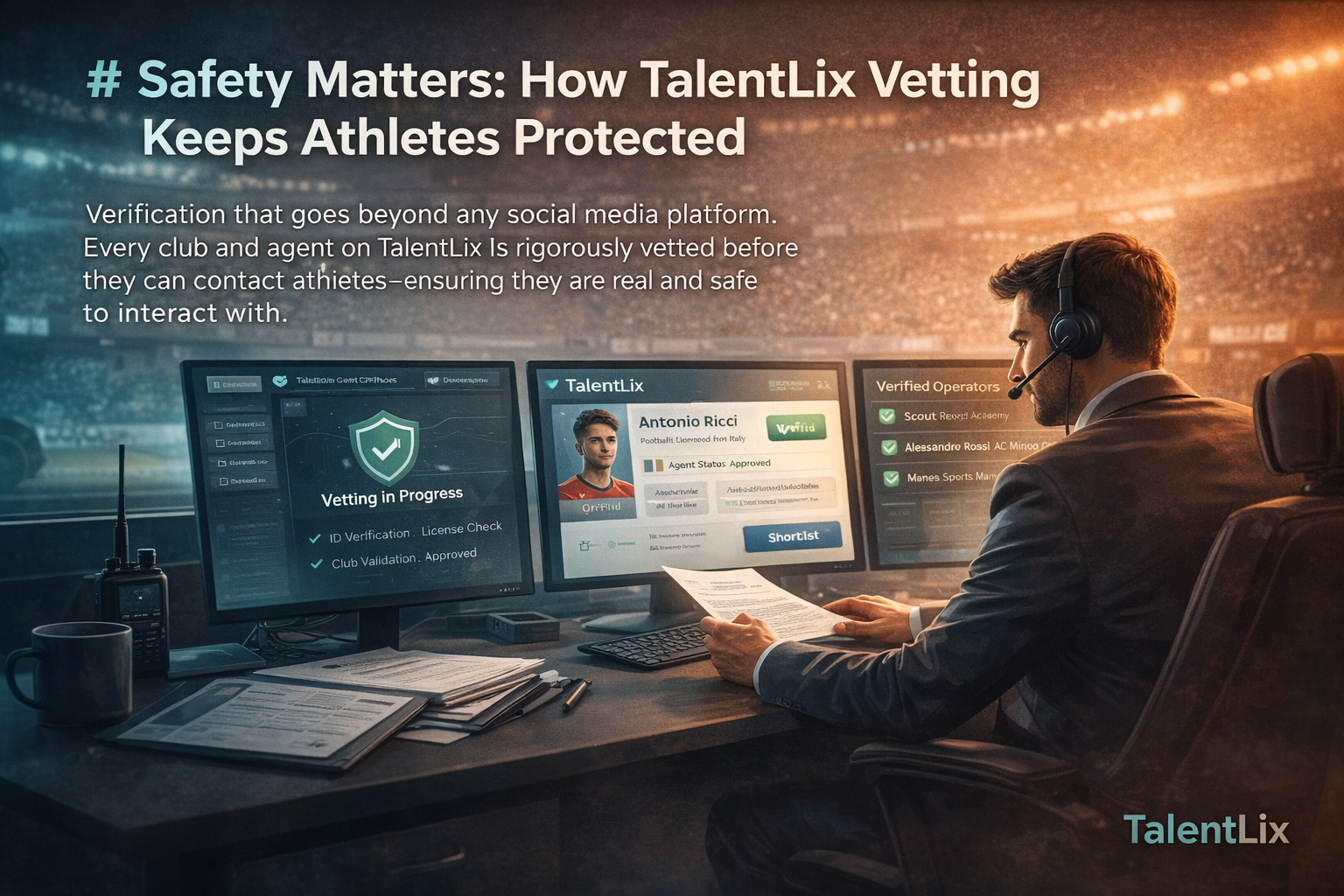
Operators are not approved automatically
On TalentLix, clubs and agents can’t just register and start messaging athletes.
They must go through a rigorous vetting process that includes checks and document requirements.
Examples of what this means in practice:
-
Agents must provide proof of legitimacy (e.g., licensing documentation where applicable).
-
Clubs must provide evidence they are real and operational (identity, entity information, and activity proof).
The point is not bureaucracy. The point is protection:
-
reducing fake profiles
-
preventing impersonation
-
eliminating “random people in DMs”
-
creating a safer environment for minors and families
This is a huge difference from general social media, where verification is optional, inconsistent, or tied to popularity—not safety.
Why this matters even more for minors and families
If a 22-year-old athlete receives a shady message, it’s already a problem.
If a 13-year-old receives it, it’s unacceptable.
TalentLix treats underage safety as a primary design requirement, not a checkbox.
Under 14 = explicit parental authorization
If an athlete is under 14, the platform requires explicit parental consent to complete registration.
That’s not “nice to have.” It’s mandatory.
This gives families:
-
awareness
-
control
-
and a clear safety barrier before the minor becomes contactable
Secure, controlled messaging—built for recruiting, not chaos
TalentLix uses an internal messaging system designed for professional contact, not open-ended social engagement.
That means:
-
conversations happen in one place (not scattered across DMs, WhatsApp, Telegram, etc.)
-
the platform can support users properly when something goes wrong
-
athletes don’t have to expose private contact details immediately
-
interactions are easier to track and manage
This isn’t about pretending the internet has no risks. It’s about reducing them with structure.
Athlete control: block operators instantly, anytime
A safe platform isn’t just “we verify people.”
A safe platform also gives athletes power and control.
On TalentLix:
-
athletes can block clubs or agents at any moment
-
the block is immediate and clean
-
it stops unwanted contact without negotiation
On generic social platforms, blocking helps—but it doesn’t solve the real issue: you still can’t reliably know who’s behind the account in the first place.
Verification + blocking is the combination that actually works.
Real support, real intervention—when it matters
Safety isn’t only prevention. It’s also response.
TalentLix includes active platform support that can intervene when users raise issues—especially around inappropriate behavior, suspicious contact, or safety concerns.
So if something feels wrong:
-
the athlete (or parent) isn’t alone
-
the platform can step in, review the situation, and act accordingly
This is a critical difference from general social media, where support is often slow, automated, or irrelevant to the recruitment context.
Why TalentLix is safer than general social media (no fantasies, just reality)
TalentLix does not claim to “eliminate risk.” Nobody can.
But it can massively reduce the most common dangers athletes face online by design:
-
Verified operator access instead of open messaging from strangers
-
Document-based legitimacy instead of “trust me bro” profiles
-
Mandatory parental consent under 14 instead of vague age gates
-
In-platform messaging instead of scattered, untraceable contact channels
-
Immediate blocking controls instead of helplessness
-
Support that understands recruiting contexts instead of generic help desks
That’s what a “safe recruitment environment” looks like.
Bottom line
If you’re building a platform for athletes—especially minors—you don’t get to treat safety as a side feature.
TalentLix is safer because it’s structured around a single idea:
Only verified, legitimate operators should be allowed to contact athletes.
Everything else—parental authorization, controlled messaging, block tools, and active support—follows from that.